Nazca Lines Peru: The Complete Travel & Flight Guide
 Written by NazcaLines
The Nazca Lines are one of Peru’s most extraordinary archaeological landscapes—a vast collection of ancient geoglyphs etched across the desert of southern Peru. From the famous Hummingbird and Monkey to enormous geometric forms stretching across the pampas, the best way to appreciate their scale is from the air. This guide explains where the Nazca Lines are, how to visit them, where flights depart from, what you will see, and how to plan your journey from Lima, Ica, Cusco, Arequipa, or elsewhere in Peru.
What Are the Nazca Lines?
The Nazca Lines are an extraordinary collection of ancient geoglyphs created across the desert plains of southern Peru. Made by carefully removing the darker surface stones to expose the lighter ground beneath, the designs include enormous animals, birds, plants, human-like figures and hundreds of geometric lines and shapes.
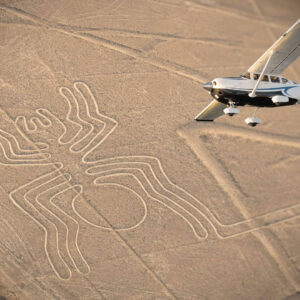
Most of the best-known geoglyphs are associated with the Nazca culture, which flourished in this region roughly between 200 BC and AD 600. Among the most famous figures are the Hummingbird, Monkey, Spider, Condor and Astronaut, alongside vast trapezoids and remarkably long straight lines extending across the desert.
Their exact purpose remains one of the great archaeological questions of ancient Peru. Researchers have proposed connections with ritual activity, water, pilgrimage routes and the surrounding sacred landscape. What makes the Nazca Lines especially remarkable, however, is their scale: many of the designs can only be fully appreciated from above.

Who Created the Nazca Lines?
The Nazca Lines were created by ancient societies that lived along Peru’s southern coast, primarily the Nazca culture, which flourished between approximately 200 BC and AD 600. Earlier cultures, particularly the Paracas, also created geoglyphs in the wider region, suggesting that the tradition began centuries before the great designs of the Nazca pampas reached their most impressive scale.
Rather than carving deeply into the earth, their creators removed the dark, iron-rich stones covering the desert surface, exposing the lighter soil beneath. The remarkably dry climate, limited rainfall and low wind helped preserve these designs for centuries.
How such enormous figures were planned with such precision remains one of Nazca’s great archaeological questions. Researchers believe simple tools, stakes, ropes and careful measurements could have allowed the ancient builders to create designs stretching hundreds of meters across the desert.

How to See the Nazca Lines
The most complete way to understand the scale of the Nazca Lines is from the air. Scenic flights over the desert reveal the full designs of the geoglyphs, something that is almost impossible to grasp from ground level. For most travelers, Nazca is the principal departure point for scenic flights over the lines, with different flight routes and departure options depending on current operations and your itinerary. Short flights from Nazca usually last about 30 to 35 minutes and cover the most famous figures. Longer routes from coastal airports may include additional desert landscapes along the way. On the ground, travelers can also visit viewpoints and small towers, though these offer a much more limited perspective.

Where do Nazca Lines flights depart?
Nazca is the main gateway for scenic flights over the Nazca Lines. Flights from Nazca Airport offer direct access to the heart of the archaeological zone, allowing travelers to see many of the most famous geoglyphs during a relatively short flight. For travelers coming from Lima, Cusco, Paracas, Ica, or Arequipa, reaching Nazca is usually part of the journey itself. Depending on the route, visitors can arrive by private vehicle, tourist bus, or as or as part of an organized itinerary that pairs the flight with other archaeological and desert sites. Because flight routes and departure airports can change over time, it’s wise to check the latest program when planning your visit.
How Long Is a Nazca Lines Flight?
Flights departing from Nazca typically last about 30 to 35 minutes, giving passengers enough time to see many of the desert’s best-known geoglyphs, including the Hummingbird, Monkey, Spider, Condor, Astronaut, Tree, and Hands. During the flight, the aircraft circles the principal figures so passengers on both sides can view and photograph them from the air. Although the time in the air is relatively short, the complete airport experience takes longer, as passengers must check in, complete the required formalities, and attend a pre-flight briefing before boarding.
What Can You See During a Nazca Lines Flight?
From the air, the Nazca Desert reveals an extraordinary collection of enormous figures and geometric designs etched across the landscape. The classic flight route includes some of the most famous geoglyphs, such as the Hummingbird, Monkey, Spider, Condor, Astronaut, Parrot, Tree, Hands, and Lizard. Between these recognizable figures, passengers can also see vast trapezoids, straight lines, and geometric forms stretching across the desert. Seen together from above, they reveal the remarkable scale and complexity of the Nazca landscape, something almost impossible to appreciate from ground level.
What Is the Best Time to Fly Over the Nazca Lines?
The best conditions for flying over the Nazca Lines are generally found in the morning, when visibility is often clearer and winds tend to be lighter. However, weather in the desert can change, and flight schedules may be adjusted for visibility, wind, or air traffic. For this reason, travelers should allow some flexibility in their itinerary, rather than planning a tight connection right after the flight. Safety and appropriate flying conditions always take priority over the scheduled departure time.
Are Nazca Lines Flights Safe?
Nazca Lines flights operate under Peruvian civil aviation regulations, with licensed pilots, established flight procedures, and aircraft subject to aviation requirements and inspections. Because these are sightseeing flights in small aircraft, operations also depend on suitable weather, visibility, and wind conditions. Delays can therefore occur, and a flight may be postponed or cancelled when conditions are not considered appropriate. Choosing an authorized operator, following crew instructions, and keeping your schedule flexible are all sensible steps when planning this experience.
What should you know before taking a Nazca Lines flight?
Before flying, passengers should arrive with their original passport and allow enough time for check-in, passenger weighing, and the pre-flight briefing. Because small aircraft have strict weight and balance requirements, every passenger is weighed before boarding, and additional conditions may apply to passengers above the airline’s weight limit. If you’re sensitive to motion sickness, eating lightly beforehand and avoiding heavy meals can make the flight more comfortable. Keep your camera or phone ready, listen carefully to the pilot’s instructions, and remember that flight times may shift according to weather and operational conditions.
How to Get to Nazca from Lima.
Nazca lies about450 kilometers south of Lima along Peru’s southern coast. Most travelers make the trip by tourist bus, private vehicle, or as part of an organized tour. The overland journey usually takes around six to eight hours, depending on traffic and the type of service. The route passes through the coastal desert and connects Lima with destinations such as Paracas and Ica before continuing south toward Nazca. Travelers with more time can easily combine these destinations. While those with a tighter schedule can still visit Nazca as part of a carefully planned private journey from Lima.
Is a Nazca Lines flight worth it?
For most travelers, flying over the Nazca Lines is the most rewarding way to experience this extraordinary archaeological landscape. From ground level, it’s difficult to comprehend the true size and complexity of the geoglyphs, but from the air their shapes, proportions, and relationship with the surrounding desert become remarkably clear. The flight is relatively short, yet it offers a perspective no viewpoint on the ground can fully reproduce. For travelers interested in archaeology, ancient cultures, or unusual landscapes, seeing the Nazca Lines from above is often one of the most memorable experiences of a journey through Peru.
Can You See the Nazca Lines Without Flying?
Great. Here’s the paragraph. Yes, but only in a limited way. A few figures, such as the tree and the hands, can be seen from roadside towers. And there are hill viewpoints near Palpa. These spots offer a glimpse of the lines, but they don’t show the full range or scale of the geoglyphs. For travelers who can’t or prefer not to fly, these viewpoints are a meaningful alternative, but the flight remains the most complete way to see them.
Plan Your Visit to the Nazca Lines.
A visit to the Nazca Lines is best planned with some flexibility, especially if a scenic flight is the highlight of your trip.» «Allow enough time for possible changes in weather or flight schedules, and consider combining the experience with Nazca’s archeological sites and desert landscapes. Whether you see the geoglyphs from the air or explore them from viewpoints on the ground, understanding the landscape around them adds another dimension to one of Peru’s most remarkable archeological destinations.